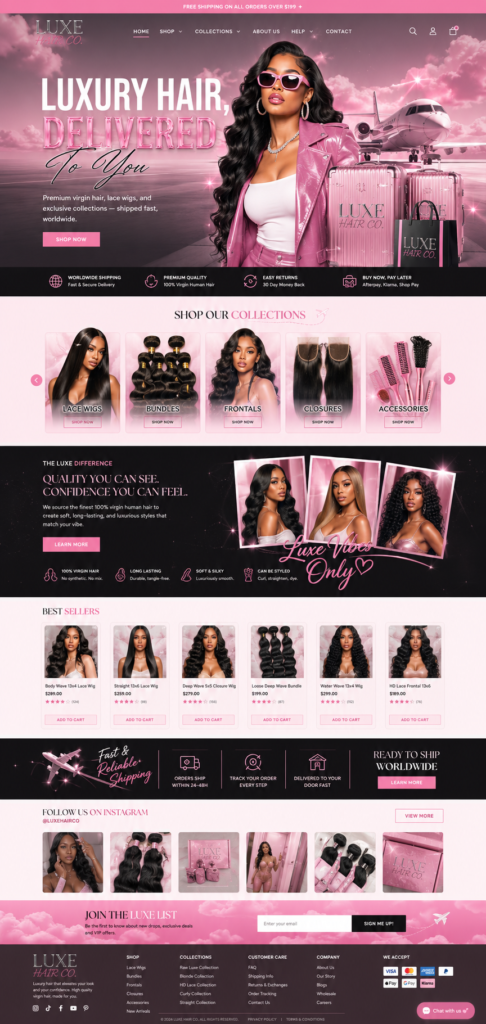
Selling hair online is competitive: buyers compare textures, lengths, lace types and prices across dozens of stores before they order. A good wig and hair extension website makes that comparison easy and gives buyers enough confidence to spend $200–400 on a unit. This guide walks through what a hair store needs, page by page.
In this guide
- Store structure that matches how people shop
- Product pages that answer every question
- Trust: the reason buyers choose you
- Checkout, shipping and pay-later
- Content that brings traffic
- Which platform to use
- Mistakes that cost hair stores sales
- A simple launch plan for a hair store
- Build an email list from day one
- FAQ
Store structure that matches how people shop
Hair buyers think in textures and product types, so your menu should too. A simple structure that works for most hair brands:
- Bundles — by texture: straight, body wave, loose wave, deep wave, curly, kinky straight.
- Wigs — lace front, HD lace, glueless, closure wigs, bob wigs, colored and highlight wigs.
- Closures & frontals — 4×4, 5×5, 13×4, 13×6.
- Accessories — bonnets, wig caps, glue, brushes, edge control.
- Deals — bundle deals and sets, which raise your average order value.
On the homepage, add a “Shop by texture” row with round photo buttons. It’s the fastest way for a returning buyer to get to the right product, and it works beautifully on mobile.
Product pages that answer every question
A buyer who has to DM you to ask “what lace is this?” may simply leave. Each product page should show:
- Length options with clear prices for each length.
- Density, lace type and cap size for wigs.
- Hair origin and grade — raw, virgin, single donor, whatever is true for your hair.
- Real photos and a short video showing movement and the lace up close.
- Can it be dyed, bleached or heat-styled? — one of the most common questions.
- Care tips and how long the hair lasts with proper care.
- Shipping time right under the Add to cart button.
Trust: the reason buyers choose you
With so many stores selling similar hair, trust is often the deciding factor. Build it on every page:
- Reviews with photos — customer installs sell more than studio shots.
- A trust strip under the hero: quality, fast shipping, easy returns, pay later.
- An About page with your story and why your hair is different.
- Clear return and exchange rules, written in plain language.
- An Instagram feed or “as seen on you” gallery.
Checkout, shipping and pay-later
Hair is a considered purchase. Offering Klarna, Afterpay or Shop Pay installments often lifts conversions, because a $300 wig becomes four smaller payments. Show a free-shipping threshold in the top bar (“Free shipping over $150”) — it nudges buyers to add one more bundle. Keep checkout short: no forced account creation, and Apple Pay and Google Pay for mobile buyers.
Content that brings traffic
Add a few helpful pages that people search for: a texture guide, how to choose wig length, lace types explained, and hair care. These pages bring visitors from Google and link naturally to your products. Keep them practical and specific to your hair.
Which platform to use
For most hair businesses Shopify is the best choice: strong product variants for lengths, reliable checkout, pay-later options and reviews apps. WordPress with WooCommerce works well if you want lower monthly costs and full control. If you mainly install wigs and sell a few units, Wix with booking plus a small store can be enough.
Mistakes that cost hair stores sales
- Supplier photos only. Buyers recognize the same images from other stores and lose trust.
- Unclear lace and density. “HD lace” and “180% density” should be stated, not guessed.
- Hidden shipping times. If units are made to order, say so before checkout.
- Too many near-identical products. Combine lengths into one product with variants instead of ten separate listings.
- No care guidance. Hair that’s cared for well gets better reviews — help customers do it right.
- Complicated returns. Explain clearly what can be returned (often unopened bundles) and how.
A simple launch plan for a hair store
- Two weeks before: shoot product photos and short videos; write product descriptions with lengths, lace, density and care.
- One week before: set up shipping rates, pay-later options and a free-shipping threshold; test a full order.
- Launch week: announce on Instagram and TikTok with an install reel; offer a launch bundle deal for the first orders.
- After launch: ask every buyer for a review with a photo, and repost installs (with permission).
Consistency beats a big launch: post installs regularly, restock best sellers on time and keep adding customer photos to the site. Over a few months this builds the trust that turns a new hair brand into a recognized one.
Selling installs too?
If you also install wigs, add a booking page with your install services and prices next to the store. Clients who buy a unit often book the install, and the other way around — one site serves both.
Build an email list from day one
Hair buyers often come back for the same texture and length every few months. An email list lets you reach them directly: restock alerts, new textures, bundle deals and holiday sales. Offer a small discount for signing up, send a care-tips email after delivery and a “time for a new unit?” reminder a few months later. For many hair brands, email brings in more repeat sales than any social platform.
Hair store designs ready to launch
- Luxury Hair Store — jet-set pink-and-black store with collections, best sellers and shipping banner
- Luxury Hair Boutique — lilac satin store with new arrivals slider and reviews
- Soft Pink Hair Boutique — minimal raw-hair store with shop by texture
- Hair Extension Boutique — summer sale store for wigs and bundles
See more in the design catalog or check packages. Every design is set up with your logo, colors and products.
Frequently asked questions
How many products do I need to launch a hair store?
You can launch with 8–15 products: your best bundles in 3–4 textures, a few wigs, closures and one or two accessories. Add more as you learn what sells.
Should I show prices for every length?
Yes. Use product variants so the price updates when the buyer picks a length. Hidden prices cost sales.
Can I sell wig installs and products on the same site?
Yes. Many hair businesses combine a booking calendar for installs with an online store for units and accessories.
Do I need my own photos?
Your own photos and customer installs build far more trust than supplier images, which buyers often recognize from other stores.