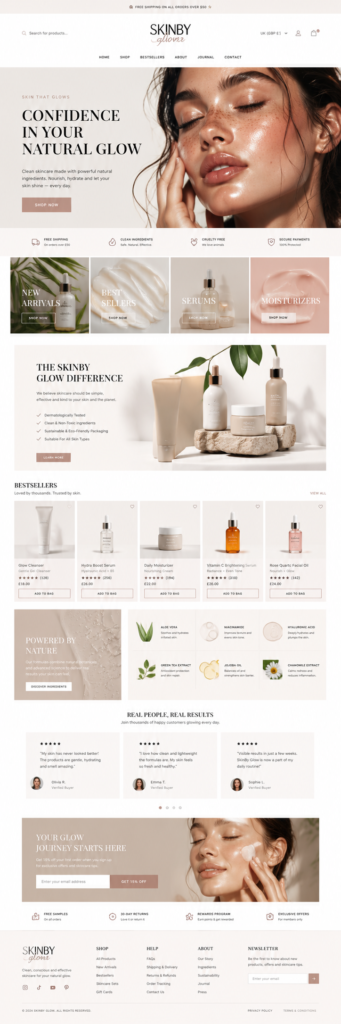
Skincare is a trust business. Whether you’re an esthetician booking facials or a brand selling serums and body butters, clients want proof before they book or buy: what’s in it, who it’s for, and does it work. This guide lists the pages and sections that make an esthetician or skincare website convert — and how to combine services and products on one site.
In this guide
- Homepage: the promise and the proof
- Treatments and booking (estheticians)
- Product pages (brands)
- Ingredients and skin concerns
- Routines and bundles
- Results and reviews
- Content that ranks
- Photos and design that build trust
- Growing repeat customers
- Skincare website checklist
- A simple content plan
- FAQ
Homepage: the promise and the proof
Open with a clear promise — “Clear, calm skin with treatments made for you” or “Botanical skincare for glowing skin” — a calm, high-quality photo and one main button: Book a facial or Shop best sellers. Under it, add proof: a trust strip (cruelty free, clean ingredients, licensed esthetician), best sellers or popular treatments, and three short reviews.
Treatments and booking (estheticians)
For each treatment show the price, time, who it’s for and what to expect: “Hydrating facial — 60 min — for dry or dull skin; includes double cleanse, exfoliation, mask and LED”. Add a short pre-care and aftercare note. Online booking with deposits keeps your calendar full and protects your time. A consultation option helps clients who don’t know what they need.
Product pages (brands)
A skincare product page should answer:
- What it does in one line (“Daily moisturizer that hydrates and calms redness”).
- Who it’s for: skin types and concerns.
- Key ingredients and why they’re there.
- How to use it, and where it fits in a routine.
- Size, price and how long it lasts.
- Reviews, ideally with skin type mentioned.
Ingredients and skin concerns
Many shoppers start with a problem, not a product. Add a Shop by skin concern row — dryness, dullness, acne-prone, sensitivity, aging — and an ingredients section that explains your hero ingredients in simple words: aloe vera, niacinamide, hyaluronic acid, rose extract. It builds trust and helps Google understand your products.
Routines and bundles
A simple “Your daily ritual” in three steps — cleanse, treat, moisturize — guides first-time buyers and makes bundles easy to sell. Offer a routine bundle with a small discount; it raises order value and gets customers using your products together, which improves results and reviews.
Results and reviews
Before-and-after photos (with permission), reviews that mention skin type and timeframe, and a “Real people, real results” section are powerful. If you’ve been featured somewhere, add an “As seen in” strip. Keep claims honest — say what clients noticed, not medical promises.
Content that ranks
Skincare questions are searched constantly: “how to build a skincare routine”, “is niacinamide good for oily skin”, “what to do after a facial”. A few helpful articles that link to your treatments and products bring steady traffic from Google over time.
Mistakes to avoid
- Vague product descriptions without ingredients or usage.
- Over-promising results — it hurts trust and can create legal issues.
- Busy designs. Skincare sells best with calm, clean layouts and plenty of white space.
- No way to choose — offer a quiz, concerns filter or consultation.
Photos and design that build trust
Skincare buyers judge quality by how your site looks. A few rules make a big difference:
- Use soft, natural light and a consistent background for product photos.
- Show texture shots — cream swirls, serum drops — so buyers can imagine using it.
- Show real skin, not heavily retouched faces.
- Keep the palette calm and the layout spacious; clutter feels cheap.
- For treatments, show your treatment room and tools — clean and welcoming.
Growing repeat customers
Skincare is repeat business. A customer who loves your moisturizer will buy it again every month or two — if you make it easy:
- Reminder emails timed to when a product runs out.
- Subscriptions or “subscribe and save” for best sellers.
- Loyalty points or a small gift with every third order.
- Treatment packages — a series of facials booked in advance.
- Education emails — how to layer products, seasonal routine changes.
Combining treatments and products
If you’re an esthetician with your own line, connect the two: after each treatment, recommend the home-care products you used, and add a “Shop what we used” section to your aftercare email. Clients trust your recommendation, and it brings steady income between appointments.
Keep it honest
Describe what products do and what clients noticed, avoid medical claims, and be clear about who a product is not for — sensitive skin, pregnancy, certain ingredients. Honesty prevents bad reviews and builds the long-term trust a skincare brand depends on.
Skincare website checklist
- Clear promise and one main action on the homepage.
- Treatments with prices, times and aftercare (estheticians).
- Product pages with ingredients, usage, skin types and reviews.
- Shop by skin concern and a simple daily routine.
- Bundles with a small discount.
- Honest results and real reviews.
- Shipping, returns and contact details easy to find.
A skincare site that covers these basics feels trustworthy from the first visit — and trust is what turns a visitor into a customer who keeps coming back.
A simple content plan
One helpful article a month is enough to grow steady traffic from Google. Good topics come straight from client questions: how to build a routine for oily skin, what to do before and after a facial, when to use vitamin C, how to calm sensitive skin in winter. End each article with a link to the treatment or products that help — readers who learn from you are much more likely to book or buy.
Skincare designs you can launch fast
- Natural Skincare — clean nude store with categories, ingredients and reviews
- Natural Skincare Shop — rose-themed brand with routine steps, concerns and a quiz
- Blush Pink Skincare Shop — daily ritual, results and bundle sections
- Beauty Services Studio — booking-first layout for estheticians
Frequently asked questions
Can I offer treatments and sell products on one site?
Yes. Many estheticians combine booking for facials with a small shop for the products they use and recommend.
Which platform is best for a skincare brand?
Shopify for a product-first brand; Wix for an esthetician focused on bookings; WordPress if you plan a lot of educational content.
Should I list ingredients on my website?
Yes — full ingredients on the product page and the key ones explained in simple words.
How do I get more product reviews?
Send a follow-up email two to three weeks after delivery, when customers have seen results, and make leaving a review easy.