Permanent makeup is a decision clients live with for years. Before they book microblading, lip blush or a paramedical tattoo, they want to see healed results, understand the process and feel sure the artist is safe and skilled. A permanent makeup website is where that trust is built — long before the first consultation. Here is how to structure one so the right clients book with confidence.
Short answer: show healed results (not only fresh ones), explain each procedure step by step, publish prices and touch-up policy, make your training and hygiene standards visible, and offer an easy consultation booking with a deposit.
In this guide
- Why PMU websites are different
- Pages your permanent makeup website needs
- Healed results and portfolio
- Paramedical tattoo pages
- Consultations, deposits and policies
- An aftercare page clients actually use
- SEO and AI visibility
- A real example
- Mistakes to avoid
- FAQ
Why PMU websites are different
A salon visit is a few hours; permanent makeup lasts years. Clients worry about pain, healing, color changes and whether the result will look natural. Many have seen bad brows and won’t risk it. That means your site has to educate, reassure and filter — attracting clients who are a good fit and setting realistic expectations before they sit in your chair.
It also means your site works as a pre-consultation. When clients already understand healing, touch-ups and aftercare, consultations are shorter and bookings are more likely.
Pages your permanent makeup website needs
- Home — your specialty, a strong healed-result photo, location and “Book a consultation”.
- Services — microblading, powder or ombré brows, lip blush, lash line enhancement, removal or correction.
- Portfolio — fresh and healed results by service.
- About — training, certifications, years of experience and your approach.
- Prices & touch-ups — first session, perfecting session, annual color refresh.
- Before & aftercare — what to avoid, healing timeline, downloadable instructions.
- Book & contact — consultation booking, deposit, policies, map.
Healed results and portfolio
Fresh work looks bold and sometimes red; healed work is what the client will actually wear. Showing both builds credibility and sets expectations.
- Label photos “fresh” and “healed (6 weeks)”.
- Show a range of skin types, ages and undertones so more clients see themselves.
- Use natural light and avoid filters — clients zoom in.
- Group by service and add short captions with technique and session count.
- Get written consent for every photo.
Paramedical tattoo pages
Paramedical tattooing — areola restoration after mastectomy, scar camouflage, stretch-mark camouflage, vitiligo — is deeply personal. Clients searching for it need a different tone: gentle, private and clear.
- Give each paramedical service its own page with plain explanations and realistic outcomes.
- Explain eligibility — for example, how long after surgery or scarring treatment can begin.
- Offer private consultations and say how discretion is handled.
- Show results respectfully, with consent, and consider blurred previews with a “view result” option.
- Mention whether you provide documentation clients can use for insurance or medical records, if that applies in your area.
Consultations, deposits and policies
PMU artists lose real money to no-shows because sessions are long. Protect your time:
| Policy | What to publish on the site |
|---|---|
| Deposit | Amount, when it’s due, whether it applies to the final price |
| Cancellation | Notice period and what happens to the deposit |
| Contraindications | Who can’t be treated (pregnancy, certain medications, conditions) |
| Touch-ups | Included perfecting session, later refresh prices |
Put a short summary next to every booking button and link to the full policy page. Clients who read it before booking are the ones who show up.
An aftercare page clients actually use
Most PMU complaints start during healing: a client panics when brows look too dark on day three or flaky on day seven. A clear aftercare page on your permanent makeup website prevents those messages and protects your results.
- A day-by-day healing timeline — what is normal on days 1–3, 4–10 and weeks 2–6, with photos if you have them.
- Do’s and don’ts in short lists: no sweating, swimming or makeup on the area for the first days, how to clean, what ointment to use.
- When to contact you — signs that need attention versus normal healing.
- A printable version clients can save on their phone.
- A touch-up reminder with a booking link for the perfecting session.
Send clients the link right after their appointment. Fewer worried messages, better healed results, and better photos for your portfolio.
SEO and AI visibility
- Use the terms clients search: “microblading in [city]”, “lip blush near me”, “areola tattoo”.
- Give every service its own page with a clear H1 and description.
- Answer common questions — pain, healing time, how long results last — in plain sentences that AI assistants can quote.
- Keep business details identical on your site and Google Business Profile.
- Ask happy clients for reviews that mention the service and city.
More on this in our local SEO guide for beauty businesses.
A real example
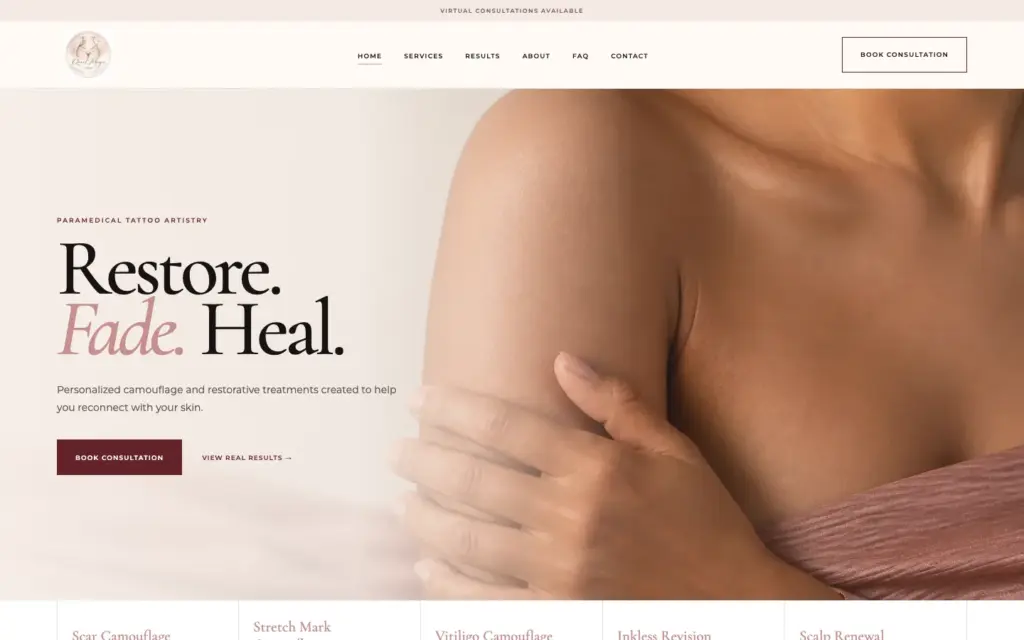
For Quiet Magic Ink, a paramedical tattoo studio, we designed a soft, calm site around the headline “Restore. Fade. Heal.” Warm skin tones, gentle typography and plenty of white space set the right emotional tone, while clear service sections and a single booking path keep the next step obvious. It is a good example of a permanent makeup website that feels private and professional at the same time.
Mistakes to avoid
- Only fresh photos. Clients assume you’re hiding healed results.
- No prices. PMU clients compare; hiding prices loses them.
- Booking without a consultation path. New clients often need to talk first.
- Generic stock images. They kill trust in a field built on real results.
- Aftercare only on paper. Put it on the site so clients can find it during healing.
Build your permanent makeup website
Eve Site Design has built over 2,600 websites since 2018, many for beauty artists. Pick a ready-made design or ask for a custom site, and we’ll set up services, galleries and consultation booking in 3–5 business days. Not sure whether ready-made fits you? Read ready-made vs custom websites.
Frequently asked questions
What should a permanent makeup website include?
Service pages for each technique, a portfolio with fresh and healed results, prices and touch-up policy, aftercare instructions, your training and an easy consultation booking.
Should I show healed or fresh results?
Both, clearly labeled. Healed photos show what clients will actually live with, which builds more trust than fresh results alone.
Do I need separate pages for paramedical tattooing?
Yes. Areola restoration, scar and stretch-mark camouflage need their own pages with a gentler tone and private consultation options.
How do I reduce no-shows?
Take a deposit at booking, publish a clear cancellation policy next to the booking button and send automatic reminders.
How much does a permanent makeup website cost?
At Eve Site Design, from $67 for a ready-made design to $299 for a fully custom site, as a one-time price.